Today’s expression: “You can’t have your cake and eat it too.”
Meaning: You can’t have everything. Don’t be greedy.
Example: “I’m so upset that I didn’t get a Ferrari for my birthday. All I got was a Lamborghini. And I’m not even 16 yet, so I can’t drive.”
“You can’t have your cake and eat it too.”

Despite the fact that September has come to a close, I’d like to invite you to honor with me the world’s greatest game, Wall Ball. Consider the following special instances and put your WB knowledge to the test.
Scenario 1:
Player 1 fumbles. Player 1 is on fire. Player 1 runs towards the wall to touch the wall to put out the fire.
Player 2 receives the ball and shoots.
The ball bounces off the wall before Player 1 reaches the wall, eliminating one of Player 1’s lives.
When the ball bounces off the wall, it touches Player 1, still before Player 1 has reached the wall.
With Player 1’s forward momentum, the ball bounces off their leg.
What is Player 1’s status?
Player 1 is on fire.
The ball bounces off Player 1’s leg and hits the wall a millisecond before Player 1’s fingertips come into contact with the wall.
Since Player 1 simultaneously fumbled and shot when the ball bounced off Player 1’s leg, then the ball hit the wall immediately afterwards, Player 1 loses another life.
In this scenario, Player 1 lost 2 lives in rapid succession.
Scenario 2:
Player 1 fumbles. Player 1 is on fire. Player 1 runs towards the wall to touch the wall to put out the fire.
Player 2 receives the ball and shoots.
Instead of hitting the wall, the ball hits Player 1 and then falls to the ground.
What is Player 2’s status?
Player 2 is on fire because Player 2 hit something other than the wall with their throw.
What is Player 1’s status?
Player 1 is on fire, but doubly so. The first fire is from the first fumble. The second fire is from coming into contact with the ball before the ball touched the ground, which is also considered a fumble. Player 1 will need to touch the wall twice to put out both fires.
Player 3 receives and shoots.
The ball makes contact with the wall before Players 1 and 2 reach the wall.
Player 2 loses 1 life.
Player 1 loses 2 lives.
Player 3 is happy.
Scenario 3:
Player 1 throws the ball. The ball hits the ground and then the wall.
What is Player 1’s status?
Player 1 is on fire.
Player 1 has not yet lost a life, even though the ball has touched the wall.
Player 1 runs to the wall.
Player 2 receives the ball and shoots.
Player 1 touches the wall.
The ball hits the wall.
Player 1 catches the ball immediately after the rebound.
What is Player 2’s status?
Player 2 is on fire.
Player 1 touches the ball to the wall while still holding the ball.
Player 2 loses a life.
Player 1 throws the ball off the wall and continues play.
It is worth noting that we did not have the fire, fumbling, shooting, and other terminology I employed in my descriptions when I was a child. I developed these terms throughout the course of developing my explanations. Also, as far as I’m aware, September is NOT actually International Wall Ball Month, and, sadly, there is no such thing as IWBM, though I would wildly support its creation, but I would push for a different acronym, and I apologize for so many commas (,) in this sentence.
Share other special scenarios in the comments below!
Brain teaser:
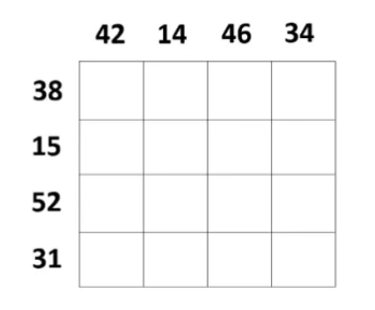
Place each number from 1 to 16 into this grid so that the sum of each column is equal to the number at the top of that column, and so that the sum of each row is equal to the number at the beginning of that row. There is only one solution.
A+

 Ça vous dit quelque chose ?
Leave a comment