Today’s quote: “Students can’t be ‘taught’ – they can only be helped to learn.” – Leo Jones
Crossover: a dribbling move / technique where someone dribbles from the right hand to the left hand or vice versa, crossing the ball over to the other hand and changing the body’s direction to get around an opponent
Dime (to drop a dime): a really good pass / to make a skilled pass to a teammate
Dish (assist): a dish is another word for a good pass that leads to your teammate scoring. An assist is when you pass to a teammate and they score within 2 dribbles
Double-double, triple-double: when your statistics reach double digits in more than one category. An example of a double-double is scoring 12 points and getting 11 assists. An example of a triple-double is getting 10 rebounds, 13 steals, and 45 points.
Downtown (from downtown!): scoring a three-pointer from a decent distance behind the three-point line. If someone makes a 3 from far from the goal, the sports announcer may say “From downtown!” to emphasize how far the ball travelled through the air.
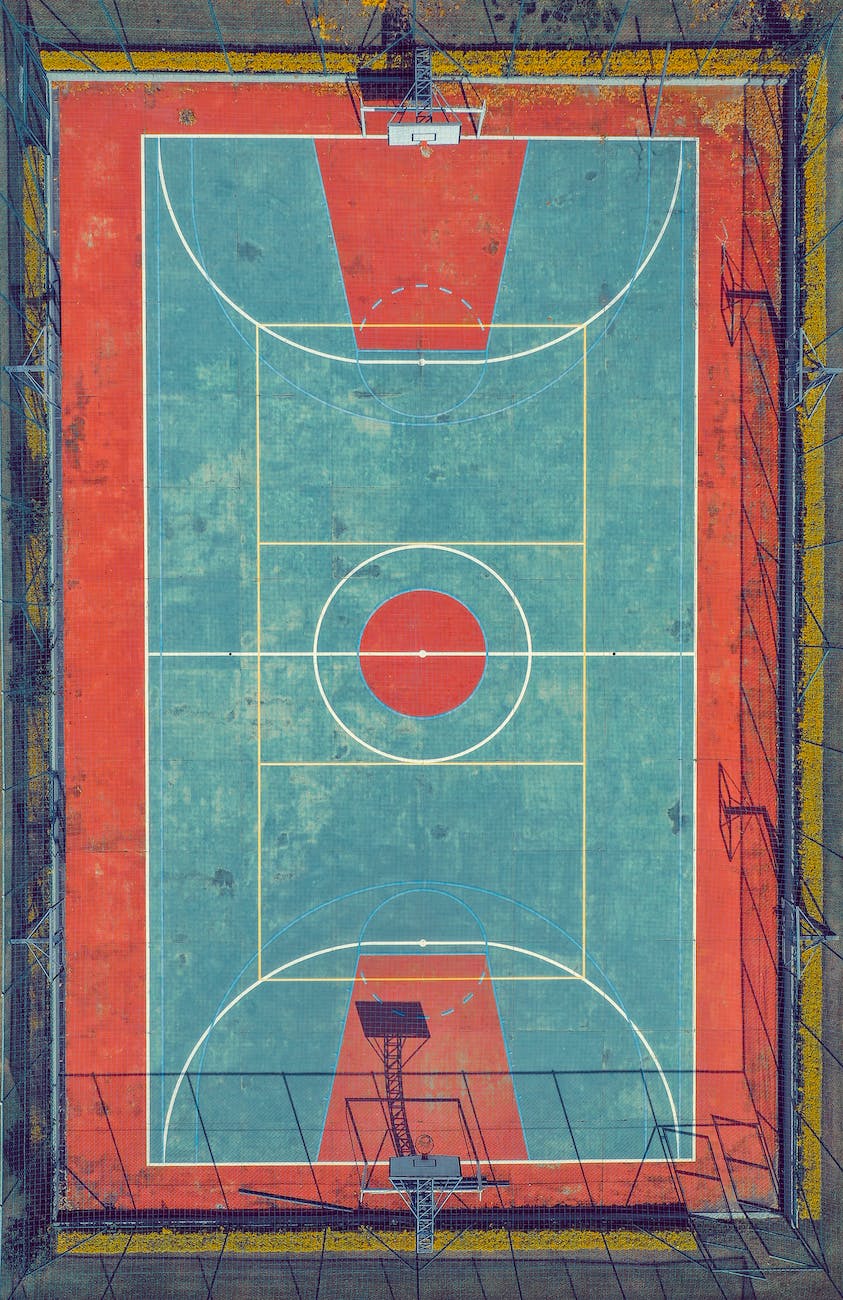
Elbow: the part of the court where the free throw line meets the long sides of the lane at a 90-degree angle
Euro step: if you’re dribbling towards the goal and pick up the ball, you’re allowed to take two steps. When your first step after picking up the ball is in one direction to fake out your defender and then your next step is in the opposite direction before you shoot, this is a euro step.
Fade away: when you lean and/or jump away from the goal when you release your shot
Fast break: when a team rushes down the court with the ball to score very quickly before the other team has a chance to set up their defense
Layup: when you run while dribbling, pick up your dribble, take a couple of steps, jump to approach the goal, and softly bounce the ball off the backboard before it goes into the hoop.
Finger roll: similar to a layup, but the ball doesn’t touch the backboard.
Foul / intentional / technical / tech: when a player breaks any rule of basketball, they are charged with a foul. Fouls can be regular, intentional, or technical, in order of smallest to largest punishment.
Violation: similar to a foul. Violations are breaking rules of basketball that are not directly related to other players. For example, a “3-second violation” is when an offensive player spends more than 3 seconds in the lane.
Sub (substitute): when a player sitting on the bench goes into the game in place of a player who’s playing in the game
Goaltending: if an offensive player takes a shot on the goal and a defensive player jumps up to hit the ball or swipe it away before it goes into the hoop, this is a goaltending violation which results in 2 or 3 automatic points for the offensive team, depending on where the shot was taken.
Granny shot: when you grab the ball with 2 hands and put it in front of your legs to gain momentum on your throw to try and get the ball in the hoop. Lots of young kids or inexperienced players might try a granny shot to have more power when shooting the ball.
HORSE: this is a game you can play with your friends. The first player will shoot the ball from anywhere on the court. If they make the shot, the next person in the order of players has to shoot from the same spot on the court. If that person misses, they receive the letter H. The next person in the rotation can shoot from anywhere they like. If they miss, it has no consequence. In other words, a player must copy a previously made shot or they receive a letter in the word “horse.” There is only one winner in HORSE. All other players lose when they receive the “e” in “horse.” (A shorter / quicker variation of this game is “PIG.”)
In-n-out: When you shoot the ball and it circles around the hoop before rolling out of the goal and missing.
Toilet bowl: When you shoot the ball and it circles around the hoop before going in.
Iso (isolation): a team can try an “iso” approach if their best player can defeat her defender in a one-on-one situation. All other players may give their best player extra space on the court when she has the ball so that they are isolated from the rest of the players
Bank: when a shot bounces off the backboard before going in the hoop. A player can call “bank shot!” when they shoot if they intend to use the backboard to make their shot.
The bank is open: This is a way to tease a player who unintentionally uses the backboard to make a goal. For example, if my teammate scores but accidentally bounced the ball off the backboard, I might say, “I guess the bank is still open!” (The joke is a play on words with banks where we store money.)
Money: a shot can be “money” if it’s a particularly beautiful or amazing shot. If a player scores a 3-pointer while their defender is up in their face, the shot would be “money.”
Broke: if a shot misses horribly, you can categorize the player’s shot as “broke.” For example, if my teammate shoots an air ball I can say, “Your shot is broke.” This term can also be used to describe someone who shoots with poor form. (This is another term that can be related to money. In English, we say “broke” to describe someone who doesn’t have any money.)
Wet: When a shot is extremely good and goes through the hoop without touching the rim, it can be called “wet.”
Jump shot / field goal: when a player jumps from both feet set on the ground to shoot the ball.
Top of the key: the area of the court at the center of the three-point line behind the free throw line
Riddle:
A woman shoots her husband, then holds him under water for five minutes. Finally, she hangs him. Five minutes later they enjoy a wonderful dinner together. How can this be?
A+

 Ça vous dit quelque chose ?
Leave a comment